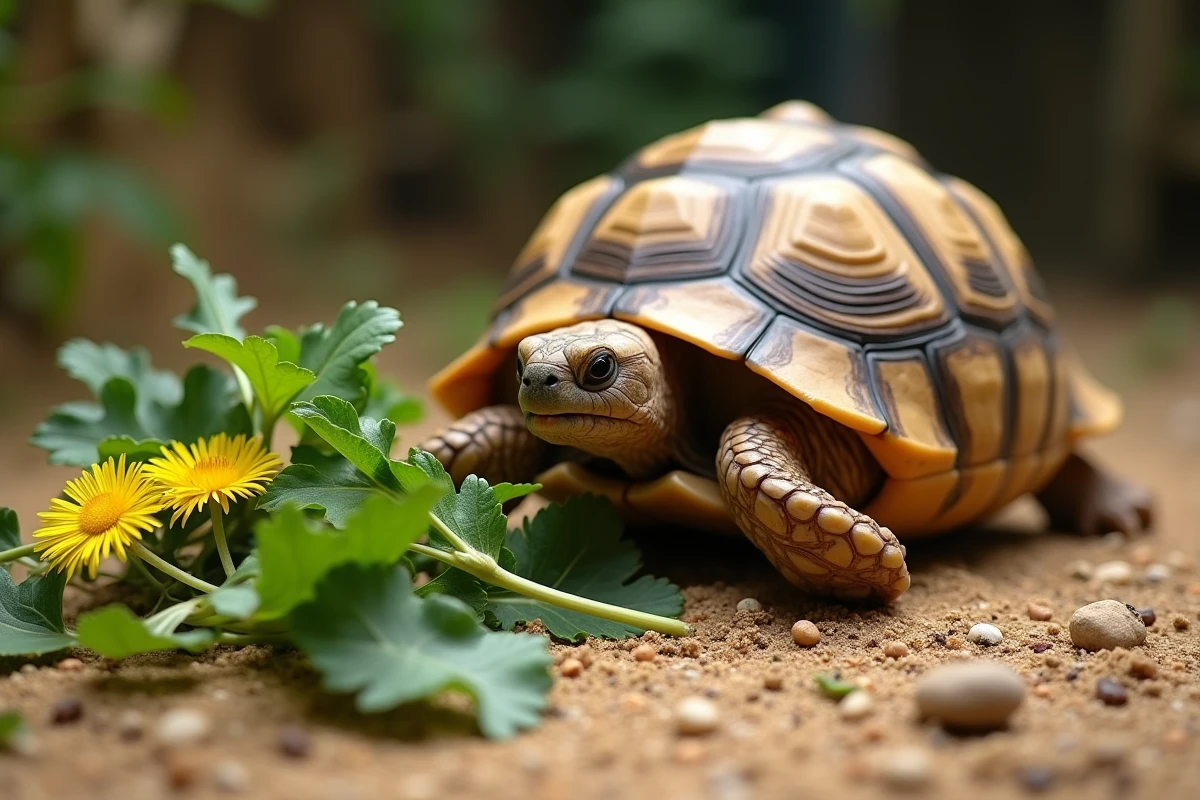
A land turtle that refuses to eat for two or three days is not necessarily sick. The refusal of food, or anorexia, refers in chelonians to any prolonged interruption of food intake. The causes range from a simple temperature fluctuation in the enclosure to a digestive blockage that endangers the animal’s life. Knowing how to differentiate between these situations helps avoid unnecessary panic and delays in treatment.
Temperature and humidity: the first diagnosis to make when a land turtle stops eating
The metabolism of a land turtle depends directly on the ambient temperature. Below a certain threshold, digestion slows down to the point that the animal spontaneously stops eating. Checking the temperature at the hot and cold spots in the enclosure is the most discriminating action before considering any other hypothesis.
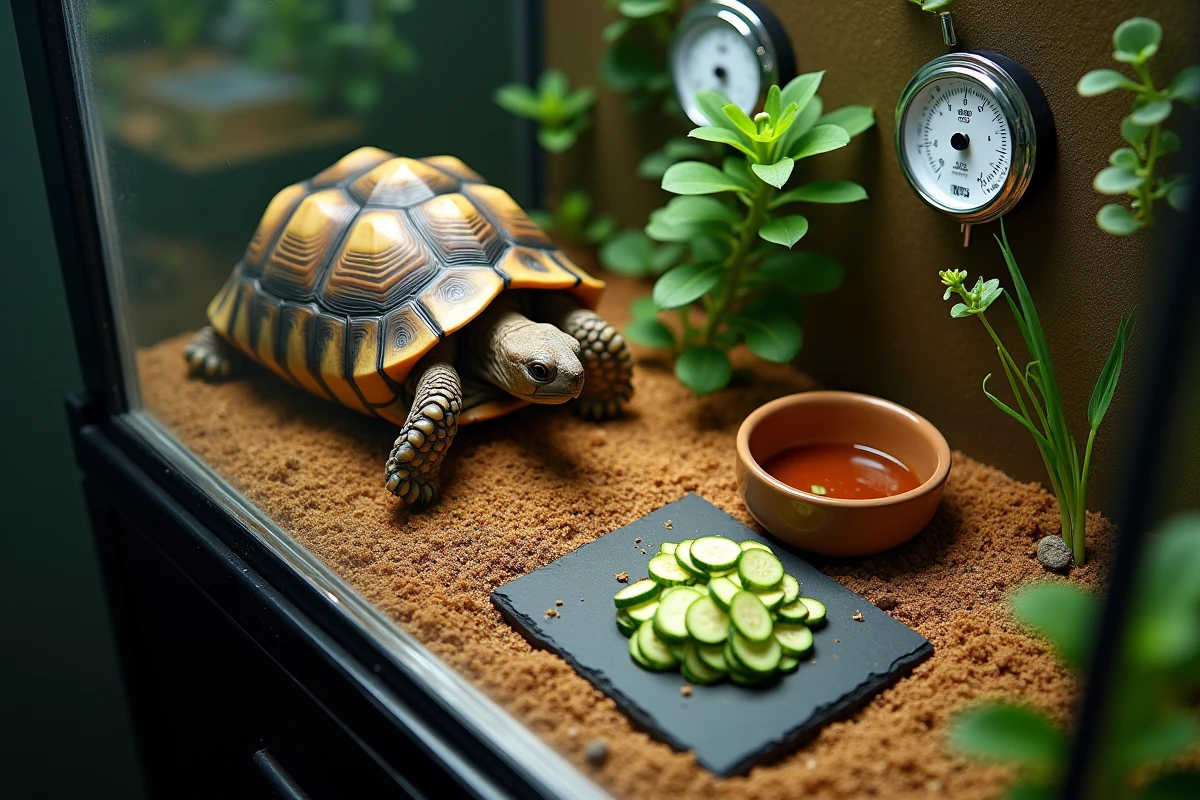
A thermometer placed on the ground (not at human height) should indicate a sufficiently warm area for the species being kept. For a Hermann’s tortoise or a Greek tortoise, the hot spot during the day is around 30-32 °C, and the cold spot does not drop below 20 °C. If these values are not reached, anorexia is almost always of thermal origin.
Understanding why my turtle is not eating anymore often comes down to this simple observation: a faulty or poorly positioned heat lamp is enough to cut appetite for days.
Humidity plays a complementary role. Air that is too dry irritates the respiratory tract and causes discomfort that diverts the animal from food. A slightly moist substrate and a regular warm bath easily correct this parameter.
Social stress and forced cohabitation: an underestimated cause of anorexia
A study from the University of Zurich published in 2023 highlighted that forced cohabitation of turtles of different sizes or species is a major factor in chronic anorexia among dominated individuals. The study shows a clear correlation between stress behaviors (avoiding heat areas, prolonged hiding) and decreased appetite, even in the absence of identifiable illness.
In practice, a smaller or shyer turtle gets pushed away from the hot spot and the food bowl. It ends up hiding for most of the day. The owner notices that it is not eating, while the problem is spatial and hierarchical.
Signs of stress to observe
- The turtle remains buried under the substrate or in its hiding place well beyond the normal resting period, including during the hottest hours
- It tries to flee when another individual approaches or systematically retracts into its shell at feeding time
- Bite marks appear on the legs, tail, or edges of the shell
Separating the animals into distinct enclosures is the most direct solution. A return of appetite in the days following separation confirms the diagnosis.
Digestive parasites and infections: the role of coproscopy
A report from ANSES published in 2021 on new pets emphasizes that digestive disorders and anorexia in land turtles are frequently linked to parasitic infections contracted before purchase. Animals from imports or poorly controlled sources are particularly exposed.
The agency recommends a systematic coproscopic examination upon arrival at the home, even if the turtle eats normally in the first few weeks. Internal parasites (pinworms, flagellates) can remain silent for months and then cause sudden anorexia when the parasitic load exceeds a certain threshold.
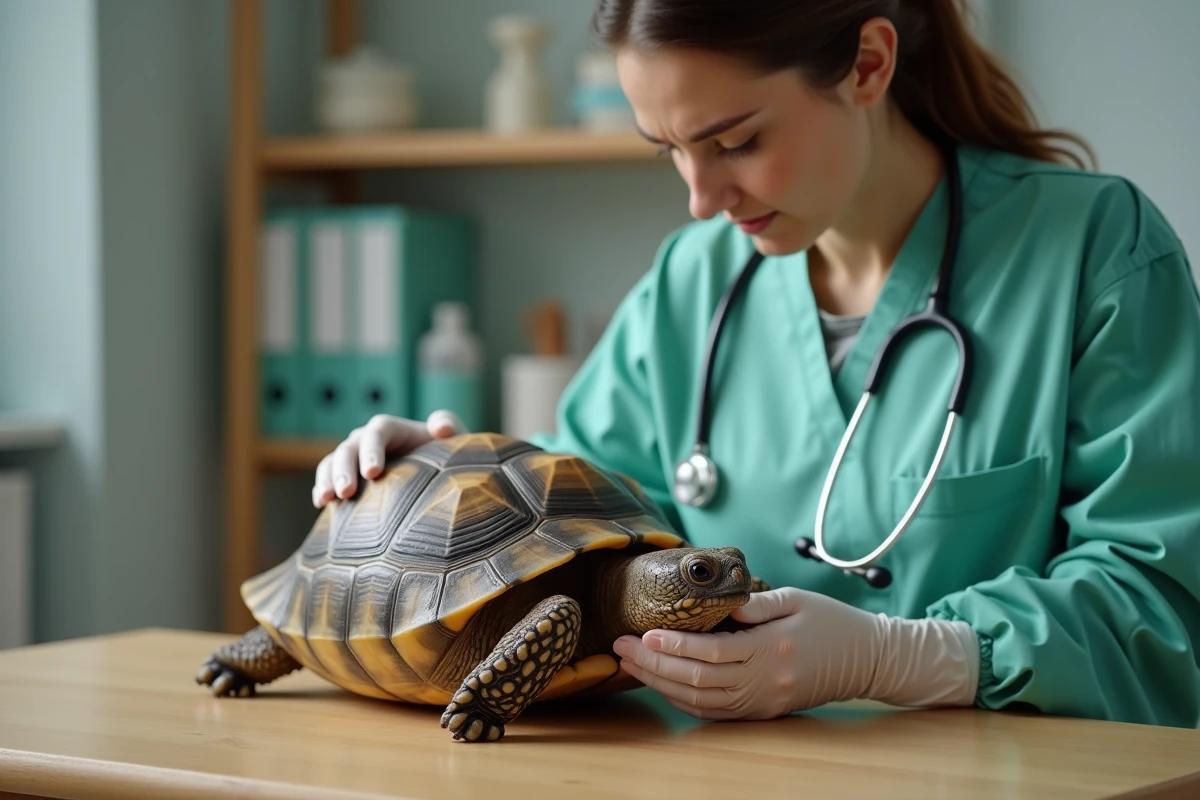
A veterinarian specialized in reptiles performs this examination using a sample of fresh feces. The appropriate antiparasitic treatment usually restores appetite within a few days to a few weeks, depending on the severity of the infestation.
Benign anorexia or veterinary emergency: concrete warning signals
The challenge for an owner is to distinguish between a temporary food refusal, related to maintenance conditions or stress, and a situation that requires prompt consultation. A few practical criteria can help make the distinction.
Signs that indicate a benign cause
The turtle remains active, moves around the enclosure, and responds to handling. Its eyes are open, without swelling or discharge. It drinks normally or shows interest in bathing. The shell is firm, without soft spots or unusual odors. In this case, correcting the temperature, diet, or social environment is usually sufficient.
Signs that require urgent veterinary consultation
- Acute dehydration: visibly wrinkled skin on the neck and legs, sunken eyes, no reaction to a warm bath
- Nasal or oral discharge, bubbles at the nostrils, open-mouth breathing (suspected respiratory infection or septicemia)
- Visible cloacal prolapse: red or pink tissue protruding from the cloaca that does not retract spontaneously
- Swollen abdomen, hard to the touch, associated with a complete absence of feces for more than a week (suspected digestive obstruction)
- Complete apathy: the turtle no longer retracts its head when handled, remains motionless even when placed in full sunlight
A refusal to eat lasting more than ten days in an active turtle, or more than a few days in a juvenile, always justifies a consultation with a specialized veterinarian, even in the absence of the serious signs listed above.
Appropriate diet to stimulate the appetite of a land turtle
Once environmental and health causes have been ruled out or corrected, the choice of foods offered directly influences the resumption of eating. The Mediterranean land turtle is a strict herbivore: its diet relies on wild plants rich in fiber and calcium.
Dandelion, clover, plantain, and milk thistle are reliable options. Fruits should only make up a small fraction of the diet, as their excess sugar promotes digestive fermentation and, ultimately, hepatic lipidosis, a fatty overload of the liver described in captive turtles fed a diet that is too rich.
Sprinkling the vegetation with a phosphorus-free calcium supplement two to three times a week covers the needs of a growing shell and a functional skeleton. A cuttlebone left available in the enclosure complements this intake.
A refusal to eat in a land turtle almost always finds its explanation in the maintenance conditions before being related to a serious pathology. Checking the temperature, observing social interactions, and performing a coproscopy upon acquisition remain the most effective triptych to prevent anorexia and timely identify situations that require veterinary care.