Tempered glass used for coffee or garden tables withstands impacts well, but it remains vulnerable to repeated micro-abrasions, thermal variations, and poorly chosen cleaning products. Protecting a glass table is not limited to placing a placemat: the choice of covering, the thickness of the film, or the nature of the pads under the objects placed on it radically changes the lifespan of the tabletop.
Tempered glass and chemically reinforced layers: what the surface can really withstand
Standard tempered glass can handle moderate thermal shocks and fragments into small, less sharp pieces in case of breakage. However, it remains sensitive to repeated friction: a ceramic plate slid in the same spot every day eventually creates a network of micro-scratches visible in low-angle light.
Since 2023, several manufacturers like Guardian Glass or Saint-Gobain offer chemically reinforced glasses through ionic treatment for furniture. According to the technical communications from GPD (Glass Performance Days), these tabletops show better resistance to micro-abrasions than standard tempered glass. Hard objects (keys, grains of sand, ceramic edges) can still scratch them, but daily degradation slows down significantly.
If you are considering different glass table protection methods, knowing what type of tabletop you have conditions everything else. Standard tempered glass requires physical protection (film, tablecloth, pads). Chemically reinforced glass tolerates bare use more, but not indefinitely.
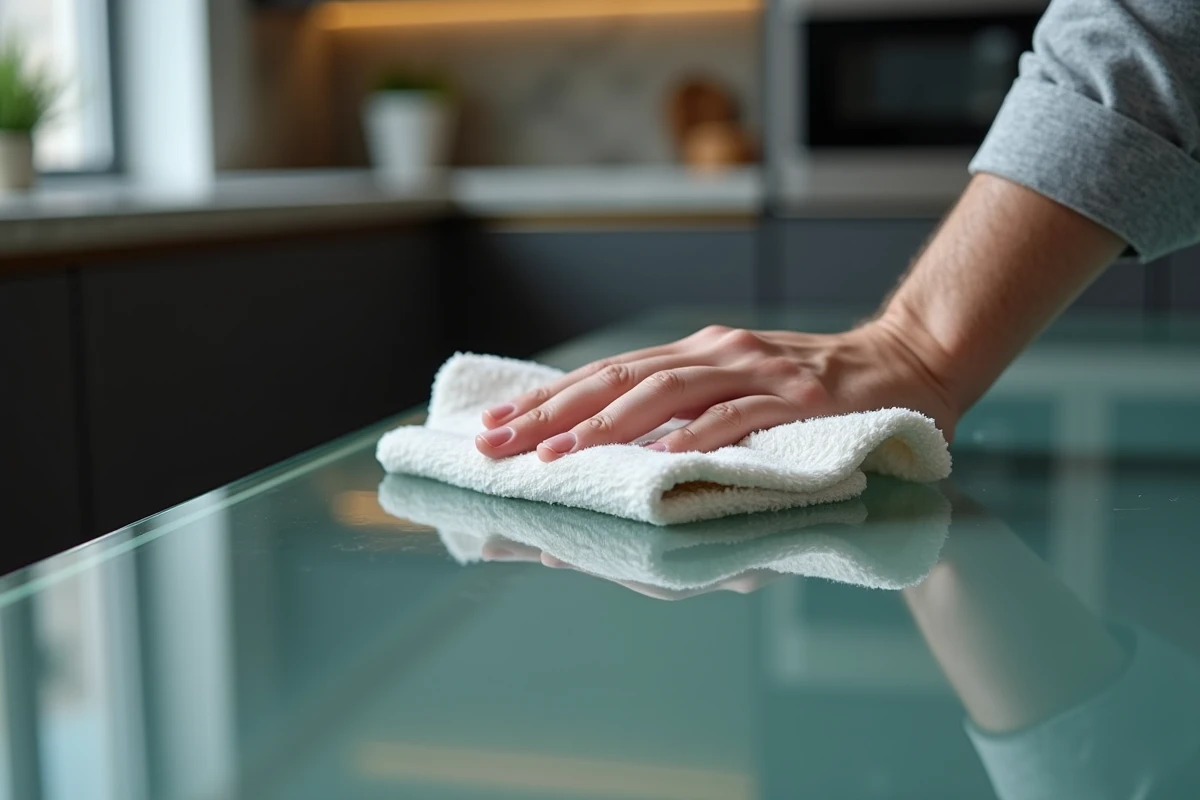
PVC or polyester protective film: thickness, adhesion, and the breakage trap
Applying a transparent film on a glass tabletop is the most common solution. Flexible PVC films, sold by the meter, can be cut to the dimensions of the table (round, oval, rectangular) and can be applied without glue thanks to electrostatic adhesion. Adhesive polyester films, which are thinner, offer an almost invisible finish.
What product sheets do not always specify
Manufacturers of glazing films (3M, Saint-Gobain Solar Gard) indicate in their technical documentation that some films modify the breakage behavior of tempered glass. The fragments remain stuck to the film instead of dispersing. This is not dangerous in itself, but it complicates cleaning after a break and may, in some cases, affect compliance with safety standards for furniture.
Before choosing a film, check these points:
- The thickness of the film: a film that is too thin (less than 0.1 mm) does not protect against deep scratches, while a thick film may yellow faster under prolonged UV exposure.
- Compatibility with tempered glass: some adhesive films create surface tensions that, on an already weakened tabletop, increase the risk of spontaneous breakage.
- UV treatment: for a garden table exposed to the sun, a film without UV filter degrades in a few months and leaves sticky residues on the surface.
Field feedback varies on the actual lifespan of these films outdoors. Manufacturers claim several years, but direct exposure to the elements reduces this duration variably depending on the climate and the orientation of the table.
Transparent tablecloths and placemats: choosing the right physical barrier
The transparent PVC tablecloth remains the most commonly used protection on dining room glass tables. It prevents scratches, cushions light impacts, and is easy to clean. The problem: a permanently placed PVC tablecloth can trap moisture between the film and the glass, creating difficult-to-remove whitish marks.
To avoid this phenomenon, remove the tablecloth at least once a week and let the tabletop air dry. On a garden table, this precaution becomes even more important after rain.
Placements and felt pads: targeted protection
Rather than a full tablecloth, cork or felt placemats protect the main impact areas (where plates and glasses are placed). Felt pads glued under heavy objects (vases, centerpieces) prevent localized friction that concentrates pressure on a small area of the tabletop.
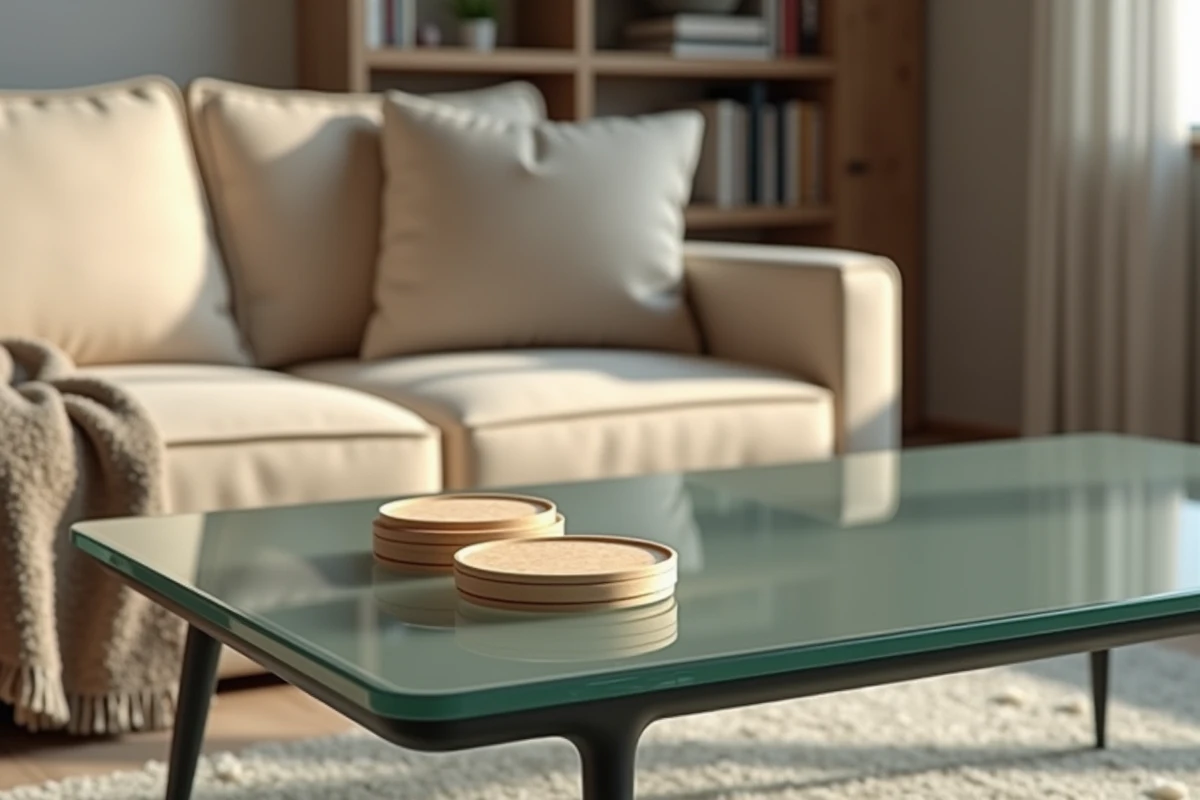
Felt remains the best material for protective pads on glass: it does not scratch, it cushions, and it is inexpensive. Hard rubber or plastic pads can themselves leave marks over time.
Cleaning products and maintenance: what damages glass without being visible
Daily cleaning often causes more damage than use itself. An abrasive cloth, a scrubbing sponge, or a product containing micro-particles of silica can scratch the glass irreversibly.
- Only use clean microfiber cloths. A cloth that has been used to wipe a countertop may contain grains of salt or sugar, sufficient to scratch the glass.
- Avoid ammonia-based cleaners on anti-reflective or anti-UV treated glass: they degrade the surface treatment.
- Diluted white vinegar remains the safest product for regular cleaning: it dissolves limescale without attacking the glass or any protective films.
- Always dry the tabletop after cleaning to avoid limescale marks, especially in areas where the water is hard.
On a garden table, the deposit of pollen, dust, or tree resin forms an abrasive layer if wiped dry. Rinse first with clear water before scrubbing.
Garden glass table: the specific constraints of the outdoors
An indoor glass table and a garden table do not face the same aggressions. Outdoors, the freeze-thaw cycle, UV rays, and gravel projections add to the usual mechanical constraints.
In winter, covering the table with a breathable cover reduces the risk of thermal shock related to morning frost on a wet tabletop. Non-breathable waterproof covers trap condensation and promote mold on the furniture frame.
Storing the tabletop vertically in a garage or shed remains the best option if space allows. Flat storage with objects placed on top multiplies pressure points and the risk of breakage during months of non-use.
Protecting a glass table relies on three complementary actions: choosing the right physical barrier (film, tablecloth, or pads), adapting cleaning to the type of surface, and protecting the tabletop from climatic constraints when it is outside. None of these measures are costly, but neglecting them silently shortens the life of the furniture.