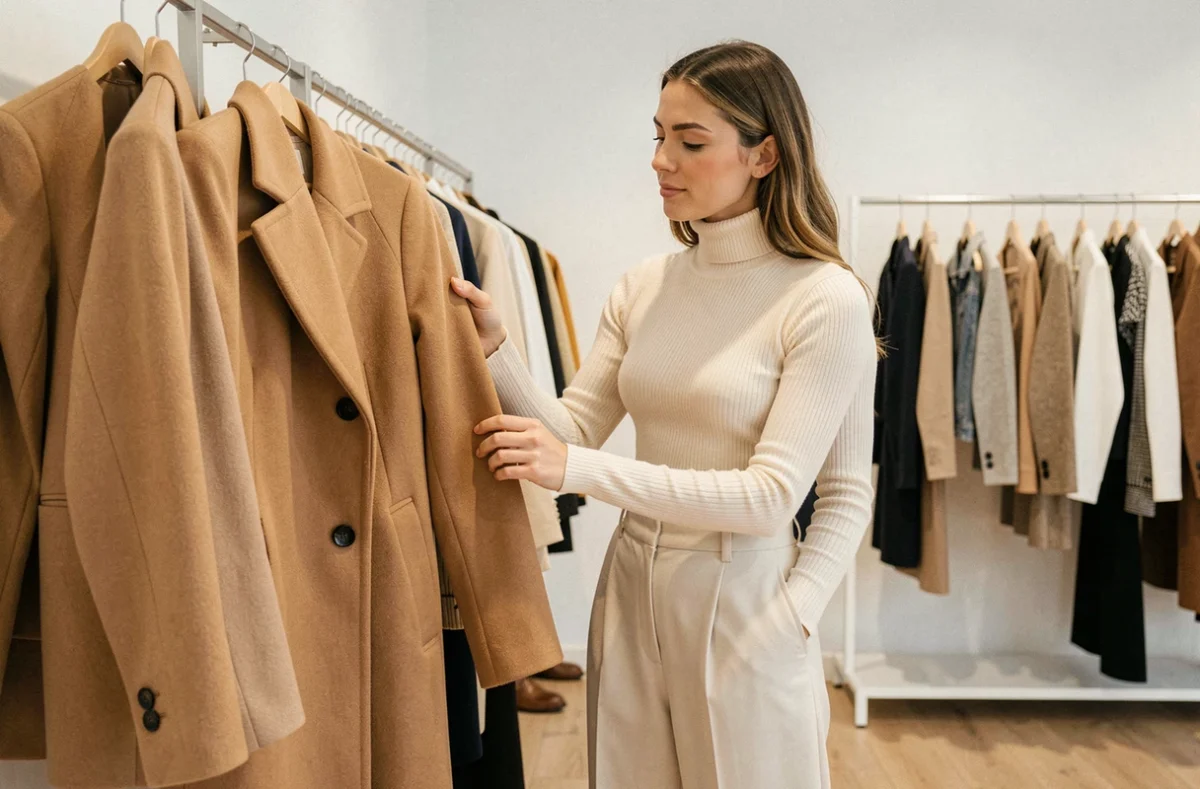
Refreshing your wardrobe isn’t about piling trend-labeled pieces into your shopping cart. The real key is to think in terms of cost per wear: divide the purchase price of a garment by the number of times you’ll actually wear it.
A €120 blazer worn a hundred times costs barely more than a euro per wear, while a €15 top abandoned after three outings costs five euros per wear. This calculation completely changes the way you build a wardrobe.
Cost per wear and repairability: two criteria for sustainable shopping
Cost per wear changes your shopping habits. Before buying a piece, ask yourself: how many different outfits can I put together with it, and how many seasons will it last? A well-cut pair of raw denim jeans, wool-blend pleated trousers or a straight-cut dress in heavyweight cotton all pass this test with ease.
Repairability is another factor to consider. A split seam, missing button or undone hem doesn’t spell the end for a garment if the fabric is sturdy and the cut is classic. Choosing woven rather than bonded fabrics, removable linings and replaceable fastenings helps extend a piece’s actual lifespan.
- Check the fabric’s density by touch: a sufficiently dense fabric is more resistant to repeated washing and pilling.
- Look for bound or topstitched seams, a sign of construction designed to last.
- Choose colorfast shades (reactive dyes rather than pigment dyes) to prevent fading after a few machine-wash cycles.
Curated selections such as Miss Marion’s shopping boutique make it easier to find pieces assessed for their versatility and durability, rather than just their seasonal novelty.
Secondhand shopping and where to buy: finding the right pieces
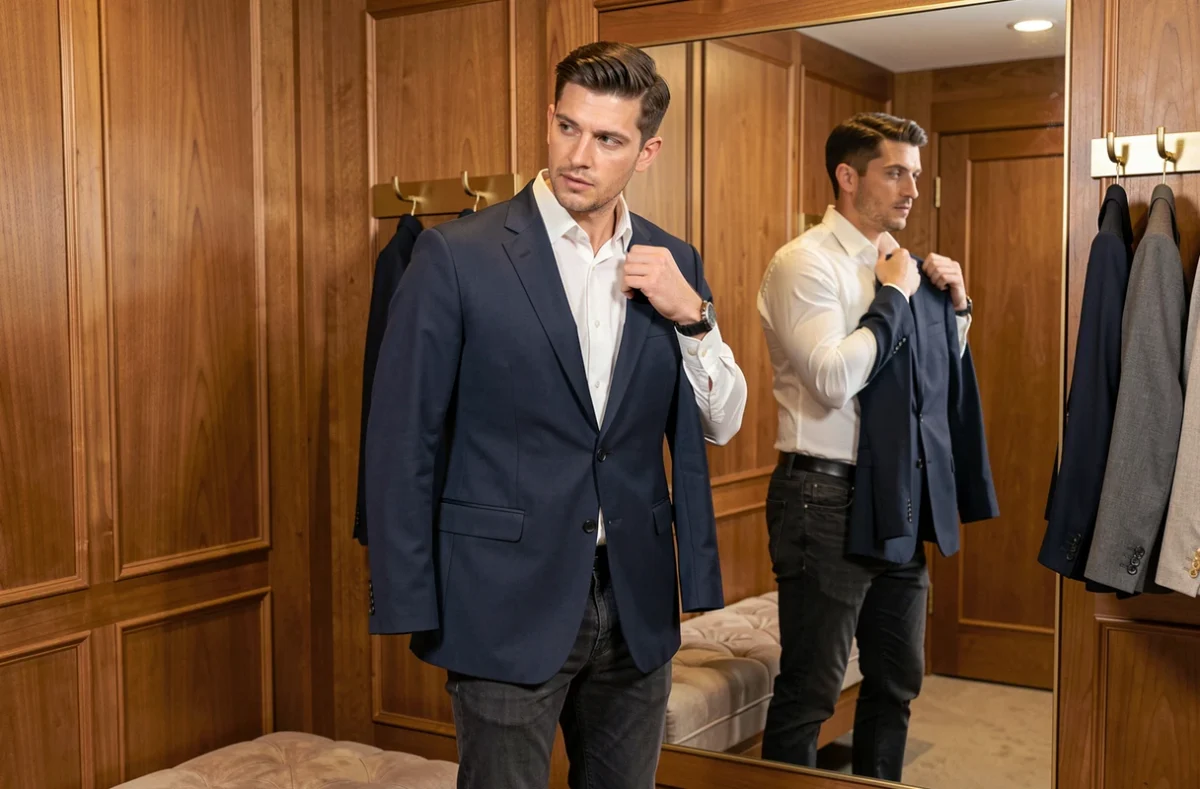
Secondhand clothing sales in France are growing in volume, according to Refashion data reported by AFP in 2026. However, not all shopping channels are equal. The price of the same item can vary considerably depending on whether it’s sold at a brick-and-mortar thrift store, on an online resale platform or through a specialist consignment shop.
At thrift stores, items are sorted by hand and prices are often set by the kilo or per item. The value for money can be exceptional, but finding the right pieces takes time and a trained eye. Digital platforms let you filter by brand, size and condition, speeding up the search. Consignment shops offer a curated selection, with higher prices but a guarantee of the garment’s condition.
Compare before you buy
Before snapping up a secondhand piece, compare prices across at least two channels to get a realistic idea of its value. A carefully inspected secondhand garment can protect your budget just as well as a considered new purchase. The same checks apply: sturdy seams, working fastenings, no set-in stains or irreversible misshaping.
Capsule wardrobe: build a wardrobe with fewer pieces
The idea behind a capsule wardrobe is to have a limited number of garments that all work together. The goal isn’t to aim for an arbitrary number, but to get rid of orphan pieces that only work with one particular look.
Three categories of clothing form the foundation of a wardrobe. Neutral basics (raw denim jeans, straight-leg trousers, a plain T-shirt, a white shirt) provide the foundation. Structured pieces (a blazer, trench coat or mid-length coat) add polish to any combination. Accent pieces (a printed dress, colorful knitwear or statement accessory) add personality without multiplying your purchases.

Check how well pieces work together
Every new piece should go with at least three items already in your wardrobe. This simple test helps prevent impulse buys. Wide-leg linen trousers, for example, work with a tucked-in T-shirt, an open shirt and a lightweight sweater, so they pass the test. A sequin skirt that only works with one specific black bodysuit doesn’t.
Textile regulations and fast fashion: what’s changing for consumers
European regulations on what happens to clothing at the end of its life are evolving. The European Commission has revised its directive on textiles, and in France, parliamentarians have reached an agreement on a bill aimed at tackling fast fashion. These measures are designed to make brands more accountable for the durability and recyclability of their products.
For consumers, comparing a garment is no longer just about style and price, but also its durability and the conditions under which it is brought to market. Brands subject to extended producer responsibility (EPR) for textiles already help fund the collection and recycling of used clothing in France. In time, labels could include a durability rating, as they already do for household appliances.
This shift encourages a more practical approach to trend-led shopping: a garment that can be repaired and recycled retains residual value, whether it’s resold, donated or repurposed. Thinking this way also helps protect your budget in the medium term.
Refreshing your wardrobe in style doesn’t mean chasing every microtrend. Calculating cost per wear, exploring secondhand options methodically and checking that each piece works with the rest of your wardrobe will give you a more cohesive, durable and ultimately more elegant result than yet another seasonal haul.