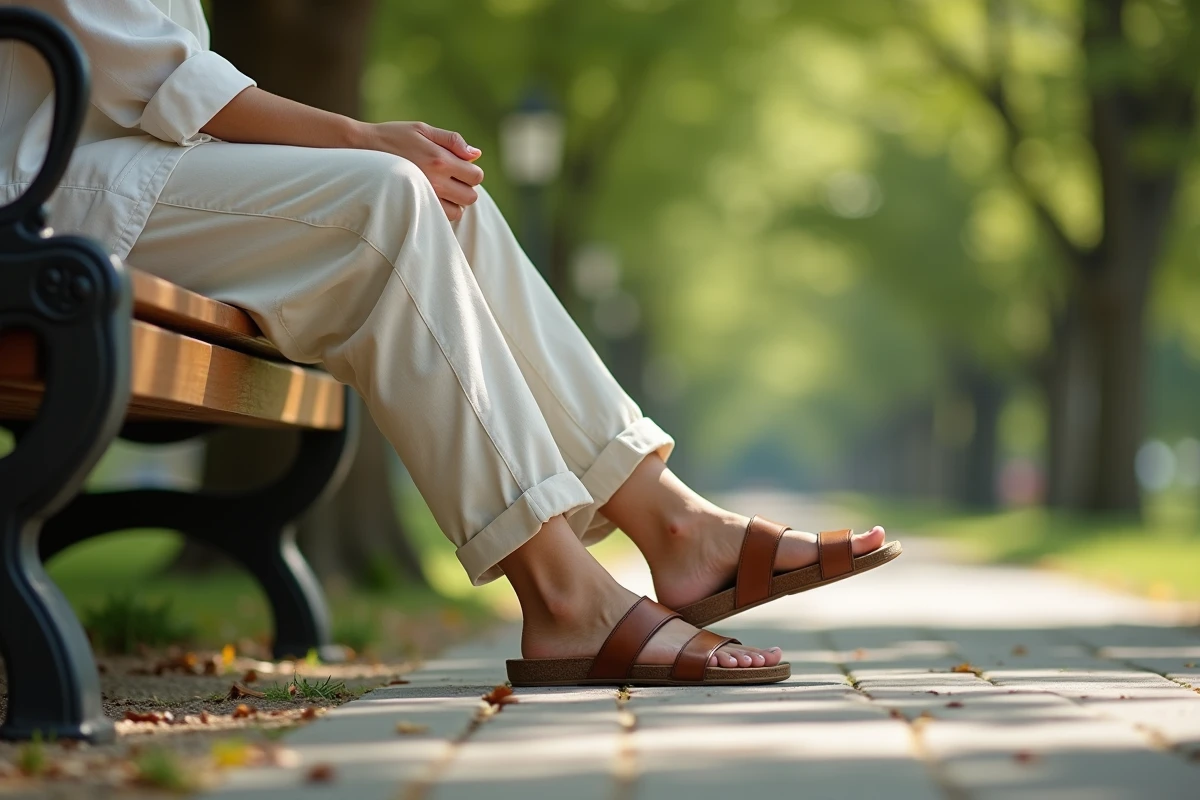
When suffering from plantar fasciitis and the nice days arrive, choosing a sandal becomes a real headache. Birkenstock and Billowy consistently come up in discussions, but their approaches to the foot are radically different. Understanding what separates them mechanically can help avoid a relapse or worsening of fascia pain.
Body weight and arch type: the criterion that comparisons ignore
Most content contrasts the rigidity of Birkenstock with the flexibility of Billowy without asking the prior question: which foot will wear the sandal, and under what weight? Practitioners regularly remind us that body weight alters the behavior of the sole under load. A soft foam like EVA, such as that used by Billowy, compresses more under a heavier person, reducing arch support within a few weeks.
In contrast, the cork and latex sole of Birkenstock retains its shape longer under high loads. For a person of average to light build with a moderately high arch, the flexibility of Billowy may be sufficient. For a heavier build or a pronounced flat foot, the rigid structure of Birkenstock offers more durable support.
There is a Billowy Birkenstock comparison for plantar fasciitis that details other selection criteria, but this weight parameter remains under-documented even though it conditions the longevity of foot support.
Birkenstock anatomical insole: arch support and limits by model
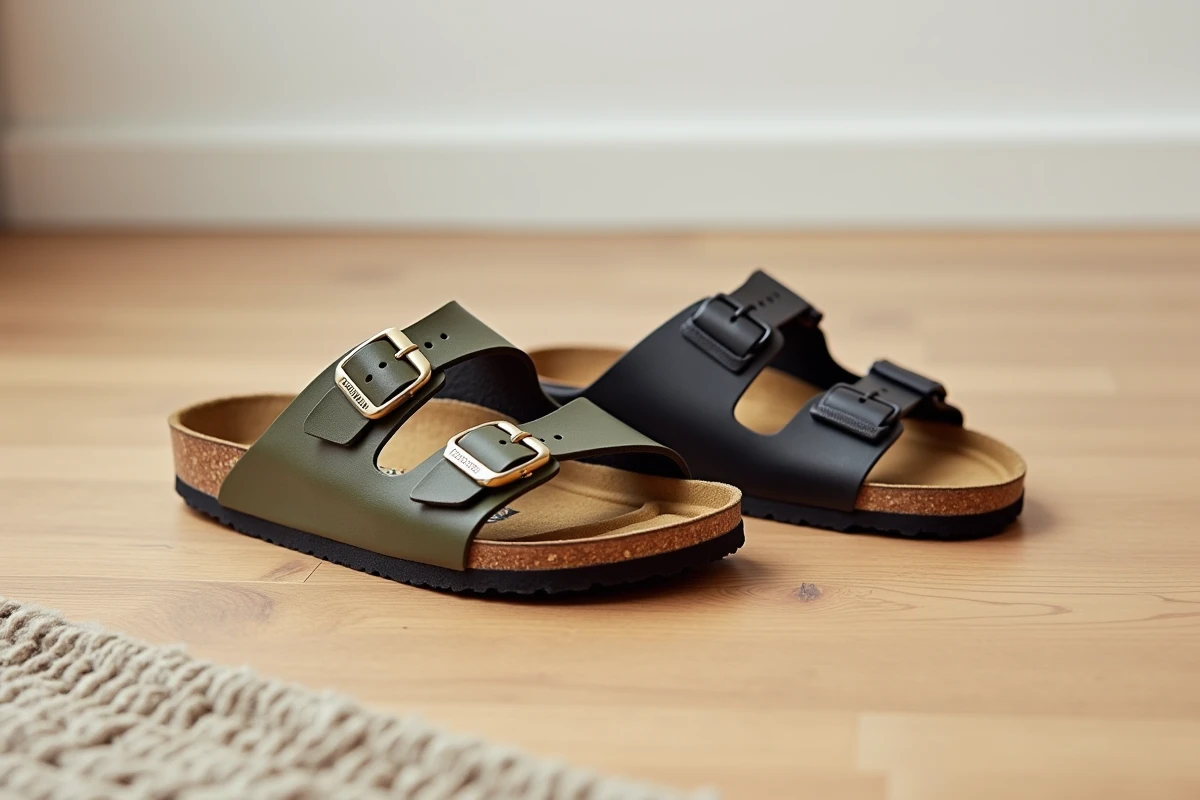
The Birkenstock footbed reproduces an anatomical relief with marked support under the longitudinal arch, a heel cup, and a metatarsal bar. This design stabilizes the foot and limits the stretching of the fascia with each step. Fabien Beuzon, a podiatrist and member of the French Union for Foot Health, notes that Birkenstock stands out from very flat open shoes by providing superior comfort for tired and painful feet.
However, he specifies that the support under the arch provided by the brand is not physiological for all feet. Some people cannot tolerate it, particularly those with a very high arch or claw toes. The support then becomes a source of irritation rather than relief.
Arizona, Madrid, or ankle strap model
A rarely discussed point: not all Birkenstock models are equal when it comes to plantar fasciitis. Ankle strap sandals (like Milano) keep the foot in place and limit toe cramping. Models with a single front strap, like the Madrid, lead to reflex cramping to hold the sandal, which exacerbates tension in the fascia.
Feedback varies on this point depending on foot morphology, but the podiatric consensus clearly favors models with at least two straps and a closed back.
Billowy soft sole: immediate comfort and adherence to wear
Billowy relies on a soft foam sole, often lined with leather, which provides a feeling of comfort from the first try-on. This immediate comfort is not insignificant from a therapeutic standpoint. Recent studies on adherence to plantar fasciitis rehabilitation programs show that immediate perceived comfort increases the likelihood of wearing shoes for the recommended number of hours. It is better to wear a “mechanically imperfect” sandal all day than a rigid sandal taken off after two hours.
For children, Billowy offers models designed with soft materials and a wide fit. Birkenstock also has a children’s range, but the rigidity of the cork sole can be problematic for a growing foot that needs flexibility.
What flexibility does not compensate for
EVA foam does not correct a foot axis defect. If plantar fasciitis is related to overpronation, the soft Billowy sole follows the movement without slowing it down. In this specific case, short-term relief is achieved, but no mechanical correction. A podiatrist will often recommend a custom orthotic to slip into the sandal, which works better with a Birkenstock sole (flatter and stiffer under the orthotic) than with a foam that deforms.
Sandals and plantar fasciitis: the hierarchy of footwear to respect
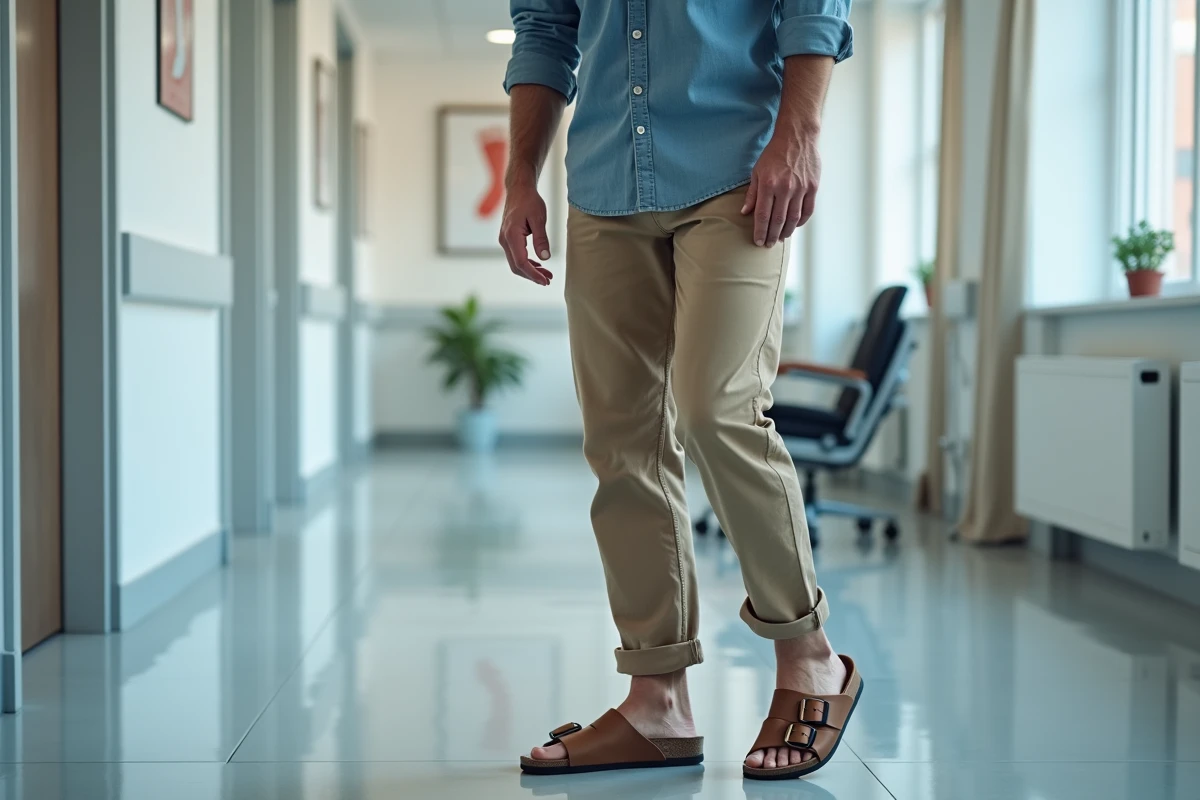
Neither Billowy nor Birkenstock is the primary solution for treating plantar fasciitis. Recent podiatric recommendations prioritize closed shoes with rigid soles and arch support. Sandals come as a complement for times when closed shoes are not feasible (beach, indoors, extreme heat).
Here are the criteria to check before choosing a sandal for plantar fasciitis:
- An arch support that does not fade under body weight after a few weeks of wear
- A rear foot support (ankle strap or heel counter) to avoid toe cramping and lateral slipping
- A sole thick enough to absorb shocks at the heel, the area most stressed by the fascia
- Compatibility with a custom orthotic, if prescribed by the podiatrist
On these four criteria, Birkenstock checks the first three boxes (provided the right model is chosen) and partially the fourth thanks to its removable footbed on certain references. Billowy checks the third criterion with its thick foam but falls short on structural support and orthotic compatibility.
The choice between the two brands ultimately depends on the role assigned to the sandal. For prolonged outdoor wear with sustained walking, Birkenstock with ankle strap and cork sole remains the safest choice. For home use or short outings where immediate comfort encourages regular wear, Billowy fulfills its role without worsening the situation, provided that the fasciitis is not linked to a pronounced biomechanical disorder.