The sound volume in a cinema is the first parameter to evaluate before any screening during pregnancy. French regulations allow a ceiling of 102 dB in theaters, while the caution threshold for the fetus is around 85 dB for prolonged exposure. This gap poses a concrete problem that we detail here.
Cinema Sound Volume and Fetal Hearing: A Regulatory Gap to Know
The fetus perceives sounds from about 30 weeks of pregnancy. At this stage, the amniotic fluid dampens some high frequencies, but low frequencies (explosions, action movie music) pass through the abdominal wall with little loss.
The legal ceiling of 102 dB far exceeds the fetal caution threshold of 85 dB. Not all theaters play at maximum volume, but blockbusters and action films regularly calibrate their soundtracks above 90 dB during climax sequences.
We recommend favoring medium-sized theaters, where sound mixing remains more homogeneous. Sitting far from the side speakers (central rows, middle of the theater) reduces direct exposure. Screenings in original version with subtitles are sometimes played at a slightly lower volume, which should be checked with the establishment. For going to the cinema while pregnant tips and detailed precautions on this point, several resources compile the available data.

3D Cinema and Pregnancy Nausea: Why to Avoid Intense Visual Effects
First trimester nausea is not just a digestive issue. It involves the vestibular system, and any discordant visual stimulus can exacerbate it. 3D cinema and films with stroboscopic effects are strongly discouraged for pregnant women prone to dizziness or nausea.
The mechanism is simple: the dissociation between the movement perceived by the eyes (through 3D glasses) and the immobility of the body in the seat creates a sensory conflict. This conflict activates the same receptors as motion sickness, amplified by hormonal changes during pregnancy.
- Avoid 3D screenings, immersive IMAX, and theaters with giant curved screens, which enhance the sensation of movement
- Favor 2D films with a moderate narrative pace, without fast chase sequences or repeated bright flashes
- If in doubt, check the film’s warnings regarding photosensitive effects (mandatory mention in France for content with epileptic risk)
This point remains valid beyond the first trimester. Changes in posture and center of gravity in the third trimester make the vestibular system more sensitive than usual.
Anxiety-Inducing Films and Sleep During Pregnancy: An Underestimated Link
We observe that the choice of film often comes down to personal taste. However, it is a documented physiological issue. An anxiety-inducing film watched in the evening increases cortical vigilance and delays falling asleep, a particularly problematic effect when sleep is already fragmented by nighttime awakenings, ligament pain, or frequent urges to urinate.
Sleep specialists during pregnancy explicitly recommend avoiding highly stimulating content in the evening. A gripping thriller or horror film keeps cortisol levels high for several hours after the screening.
Choosing a morning or early afternoon screening for emotionally charged films allows for dissociating the stimulus from bedtime. Comedies, light dramas, or animated films remain safe bets for late screenings.
Physical Comfort in the Theater: Seat, Sitting Position, and Blood Circulation
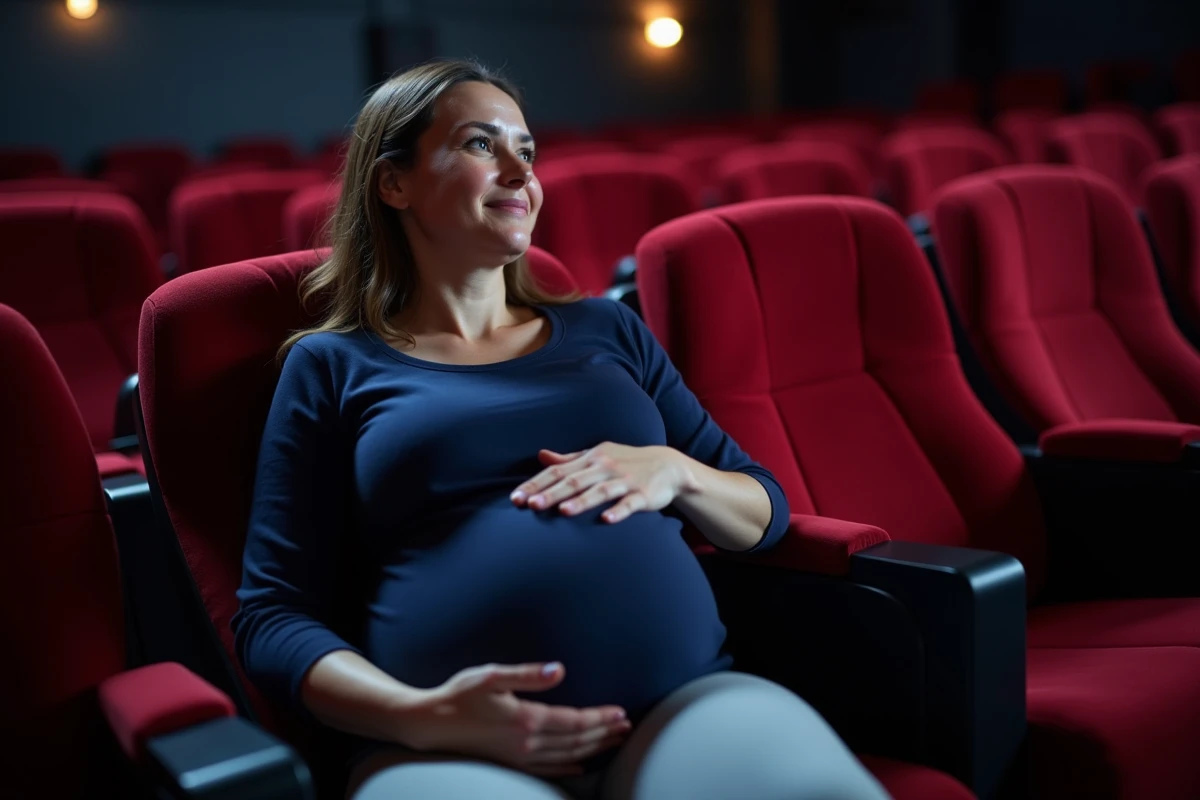
Beyond the second trimester, sitting in the same position for two hours or more slows venous return. The risk of heavy legs and edema increases with prolonged sitting, especially when the seat does not allow for slightly elevating the legs.
- Reserve an aisle seat to discreetly get up and walk for a few minutes during the screening
- Bring a lumbar cushion or a rolled-up jacket to support the lower back, as standard seats rarely provide adequate support for pregnancy lordosis
- Keep a water bottle accessible: the theater’s air conditioning dehydrates, and dehydration exacerbates Braxton Hicks contractions
- Avoid films longer than two hours in the third trimester, as bladder pressure makes immobility uncomfortable

Some theaters offer “premium” reclining seats or spaces with more legroom. These options, when available, are worth the extra cost for a woman pregnant beyond 28 weeks.
Ventilation and Room Temperature
Thermoregulation changes during pregnancy. A poorly ventilated or overheated room can cause vagal discomfort, especially if the screening is crowded. Arriving a few minutes early allows for assessing the temperature and changing seats if necessary.
The cinema remains a perfectly compatible activity with pregnancy in all trimesters. Adjustments focus on specific parameters (sound volume, type of projection, duration of the screening, positioning in the theater) rather than a blanket prohibition. Adapting the choice of theater and time slot is enough to transform the outing into a real moment of relaxation.