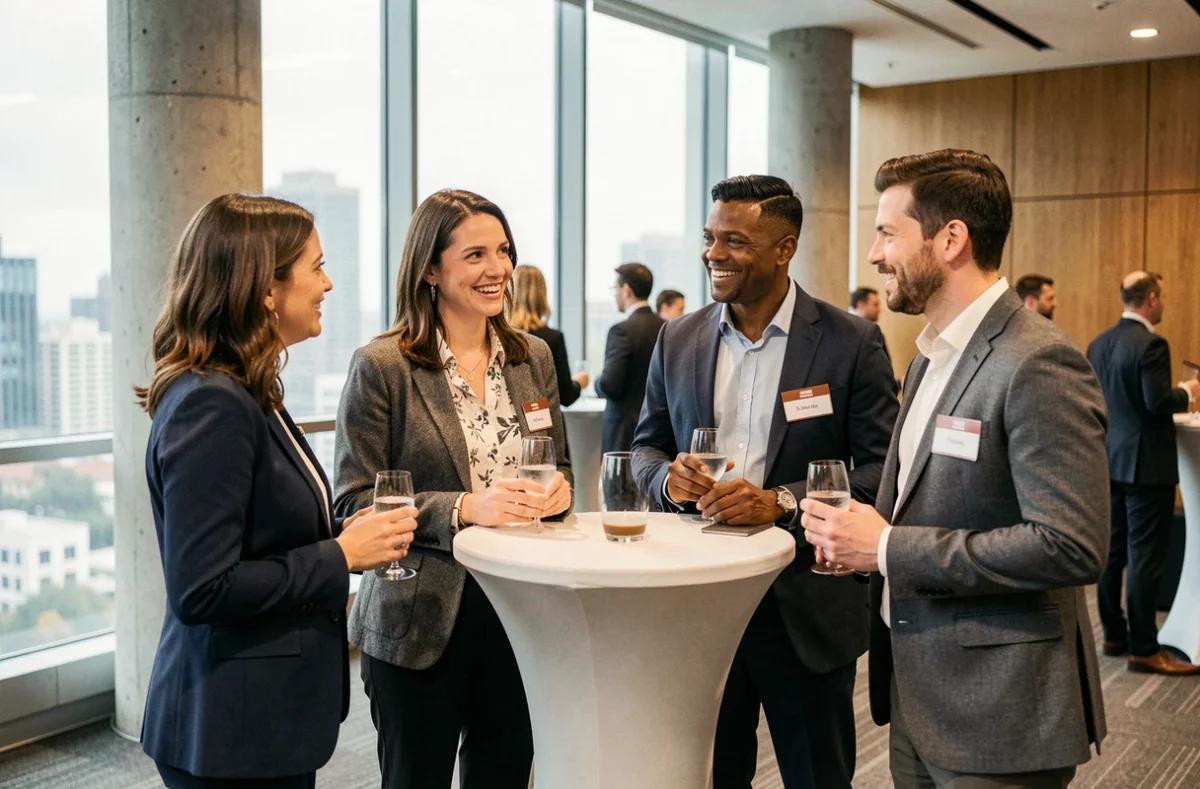
Professional events in France and Belgium attract thousands of participants every year, but attendance figures say nothing about the quality of the interactions taking place.
The Freeman Networking Trends Report, published in July 2025, reveals a clear disconnect between organizers and attendees: organizers overestimate the demand for business opportunities, while attendees come primarily to share ideas and explore collaborations. Organizing a professional event that encourages people to connect therefore means rethinking what you measure, what you facilitate and what you consider a success.
Measure the connections made at a professional event, not just satisfaction
A satisfaction survey handed out at the exit gives you a sense of the atmosphere, but rarely an accurate picture of the connections made. Two attendees can both rate an event 9/10 without having exchanged a single business card.
To assess whether an event has genuinely helped people make valuable connections, you need to ask different questions. How many new people did each attendee connect with? How many conversations led to an exchange of contact details? And, most importantly, who didn’t meet anyone despite attending?
Agencies specializing in professional event design build these metrics into the planning stage, as you can see at https://www.discoverymeeting.be, where the approach to connecting people shapes the entire event format.
Collecting this data doesn’t require a complex setup. A short form sent 48 hours after the event, focused on three closed-ended questions (number of contacts, intention to follow up, sense of inclusion), produces more actionable results than an overall satisfaction rating.
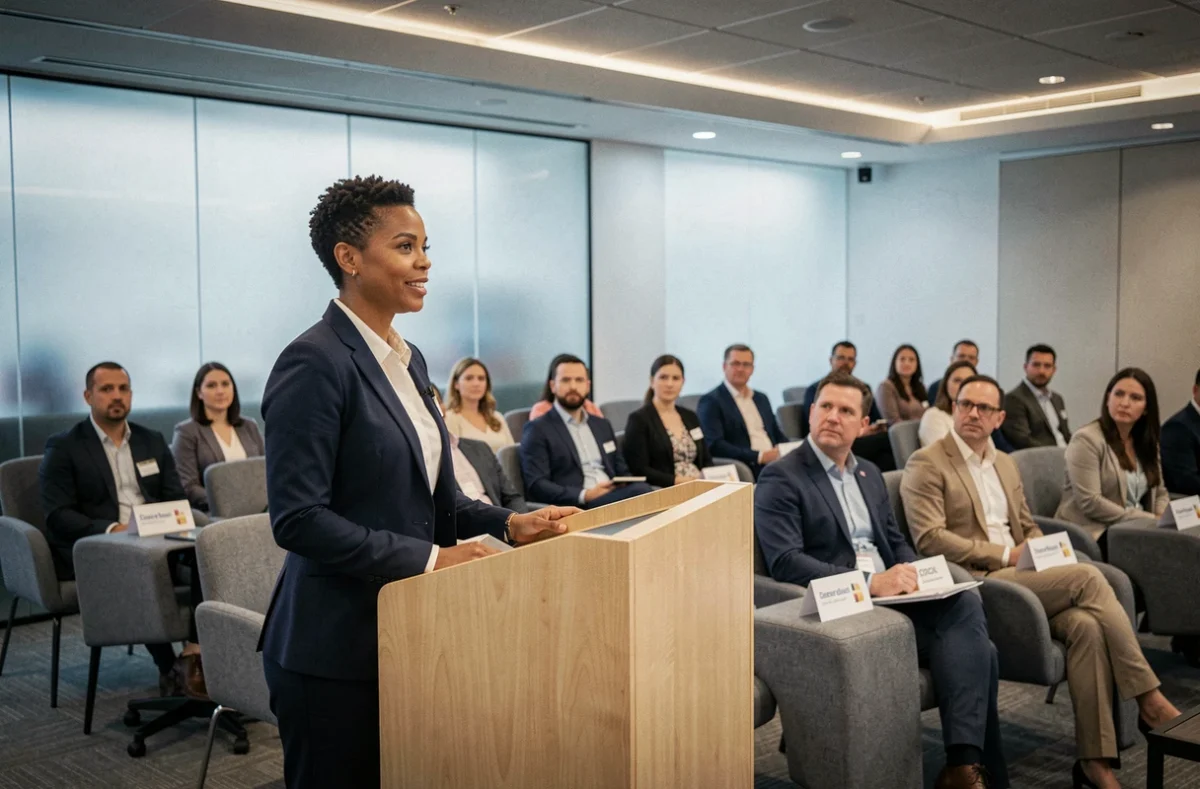
Meeting formats built around shared challenges
A traditional plenary session puts the audience in a passive role. Conversations are left to the hallways and coffee breaks—in other words, the moments the organizer doesn’t control.
Structuring meetings around a shared challenge changes the dynamic. Instead of grouping guests by industry or company size, organize tables around a specific question: how to reduce supplier payment times, how to recruit in a tight labor market, or how to adapt a product to new regulations.
What this changes for attendees
People sitting at a themed table have a common starting point. The conversation begins with the topic, not a sales pitch. Introverted attendees, who are often sidelined by cocktail-style formats, have a clear reason to speak up.
This format requires preparation. During registration, the organizer needs to gather the topics that matter to each attendee, then put groups together to encourage a diversity of perspectives without creating too great a power imbalance.
Time and space for informal conversations in the program
Informal conversations aren’t secondary breaks between the sessions that matter. According to research cited by PCMA (Professional Convention Management Association), an event’s perceived value depends as much on spontaneous conversations as on scheduled presentations.
Treating these moments as full-fledged parts of the program involves several practical choices:
- Schedule at least one 30-minute slot between each plenary session, with no competing activities, so attendees can continue a discussion started in a workshop.
- Set up spaces of different sizes: high tables for quick conversations, seating areas for longer discussions, and quiet zones for people who need a breather before getting back to networking.
- Display a clear map of meeting spaces at the entrance, with signs organized by topic or purpose (find a technical partner, discuss recruitment, or simply chat).
A packed schedule of keynotes and back-to-back workshops may generate content, but it stifles the connections it claims to encourage.
Following up after the event
The value of connections extends beyond the venue. A contact made during a workshop comes to nothing if there’s no way to follow up. Organizers can help keep the conversation going without being intrusive:
- With each attendee’s prior consent, send them a list of the people at their themed table, along with their professional contact details.
- Offer an online space (private group or discussion thread) that stays active for two to three weeks after the event, with a recap of the topics discussed.
- Follow up once, ten days later, with a simple question: have you reconnected with anyone you met at the event?
Digital accessibility for online registration
Accessibility at a professional event isn’t limited to ramps and reserved seating. Since June 28, 2025, European requirements under the accessibility directive have applied to certain e-commerce services, subject to exemptions that include some microenterprises.
For organizers offering online registration, this means the digital journey needs to be checked: forms that work with screen readers, sufficient contrast and keyboard navigation. Overlooking this means excluding some attendees before they even walk through the door.
The venue’s physical accessibility should, of course, also be audited (corridor widths, accessible signage, hearing loops in the room). But the digital barrier comes first and remains invisible to organizers who don’t test for it. Seeking expert advice on the applicable requirements can help avoid unpleasant surprises on the day.
A professional event that claims to encourage interaction but has a registration form that blocks part of its audience misses the mark from the outset. The most valuable connections sometimes come from unexpected people—provided you’ve left the door open to them.