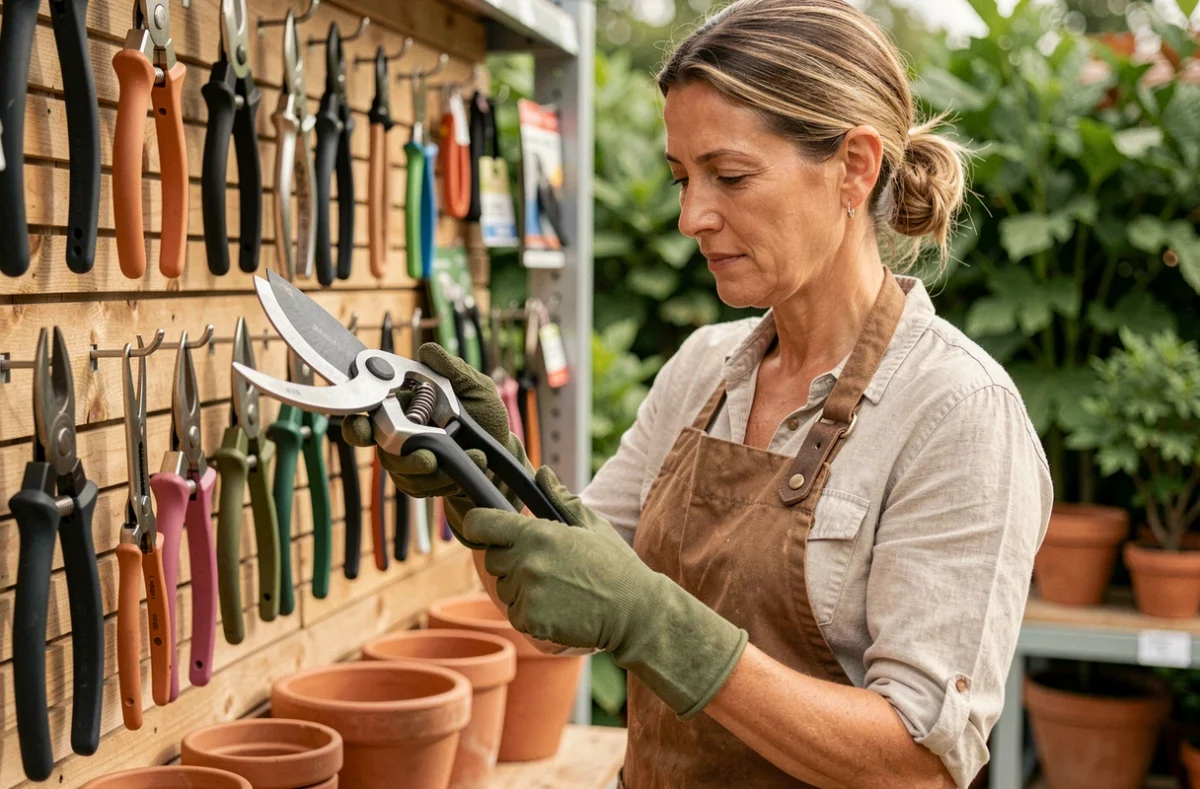
The garden equipment market has become more complex in recent years. Between thermal tools, wired electric tools, and battery models, the ranges are multiplying without the selection criteria always being clear. Regulations are also evolving: the durability index is gradually replacing the reparability index on certain devices, and noise usage rules vary from one municipality to another. Choosing garden equipment is no longer just about comparing power or catalog prices.
Durability and reparability: what the regulations change for gardening equipment
Since 2025, the reparability index for lawn mowers is evolving towards a more demanding durability index. This new framework, stemming from the AGEC law, incorporates criteria for reliability and upgradability, beyond just the availability of spare parts.
In practice, two mowers with comparable power can have very different lifespans. One will offer accessible spare parts for several years, while the other will become waste due to lack of manufacturer support. Before purchasing, checking the manufacturer’s spare parts policy becomes as relevant a reflex as reading the technical sheet.
For cordless tools (hedge trimmers, blowers, battery mowers), the question doubles. The device falls under the DIY and gardening articles sector, while the battery follows its own recycling stream. The availability of compatible replacement batteries directly affects the longevity of the entire unit. A blower whose battery is no longer manufactured after a few years loses all utility, even if the motor still works.
Anyone browsing all the equipment on Ambiance Jardin will notice that product sheets increasingly provide information on these durability aspects, a sign that the market is gradually integrating these requirements.
Electric or thermal garden equipment: the criteria that the technical sheet does not mention
The choice between a thermal tool and an electric model (wired or battery) arises for mowers, hedge trimmers, brush cutters, and blowers. Raw power and autonomy are the first criteria consulted. They are not sufficient.
The noise constraint, specific to each municipality
The usage time slots for mowers, blowers, and chainsaws vary according to municipal or prefectural decrees. A thermal mower used within a theoretically permitted time frame can still cause problems if the duration, repetition, or intensity of the noise constitutes a nuisance in terms of neighborhood. Checking the rules of your municipality before purchase helps avoid ending up with an unusable device during the designated hours.
An electric or battery model generates a significantly lower noise level, which broadens the actual usage time slots. Field feedback diverges on this point: some users find the difference marginal on powerful blowers, while others find it decisive in dense residential areas.
Maintenance and long-term cost
A thermal tool requires regular maintenance (oil change, spark plug, air filter, winterizing fuel). A battery tool eliminates these steps but introduces the cost of battery replacement, often significant compared to the price of the device. The available data does not allow for a definitive conclusion on the total cost of ownership: it depends on usage frequency, garden size, and the manufacturer’s pricing policy on consumables.
Soil, fencing, and terrace: choosing outdoor layout materials
Garden equipment is not limited to motorized tools. The choice of materials for the ground, fencing, and terrace structures the outdoor space for years.
- Natural wood (treated pine, douglas, larch) offers a warm appearance but requires annual maintenance (stain, brightener). Without treatment, it grays and may degrade depending on exposure.
- Composite wood reduces maintenance while mimicking the look of wood. Its resistance to UV and moisture varies greatly depending on the composition and manufacturer.
- PVC, often used for fencing, requires only occasional cleaning. However, its appearance may seem less natural, and its longevity depends on the quality of the material against temperature variations.
- Reconstituted stone or porcelain stoneware for terraces offers high durability, but their installation requires rigorous ground preparation (drainage, leveling).
The determining criterion remains the suitability of the material to local conditions: exposure, soil type, rainfall. A terrace in full sun in a humid region will not age the same as the same terrace in a dry and shaded area.
Watering and plant care: adapting equipment to your garden
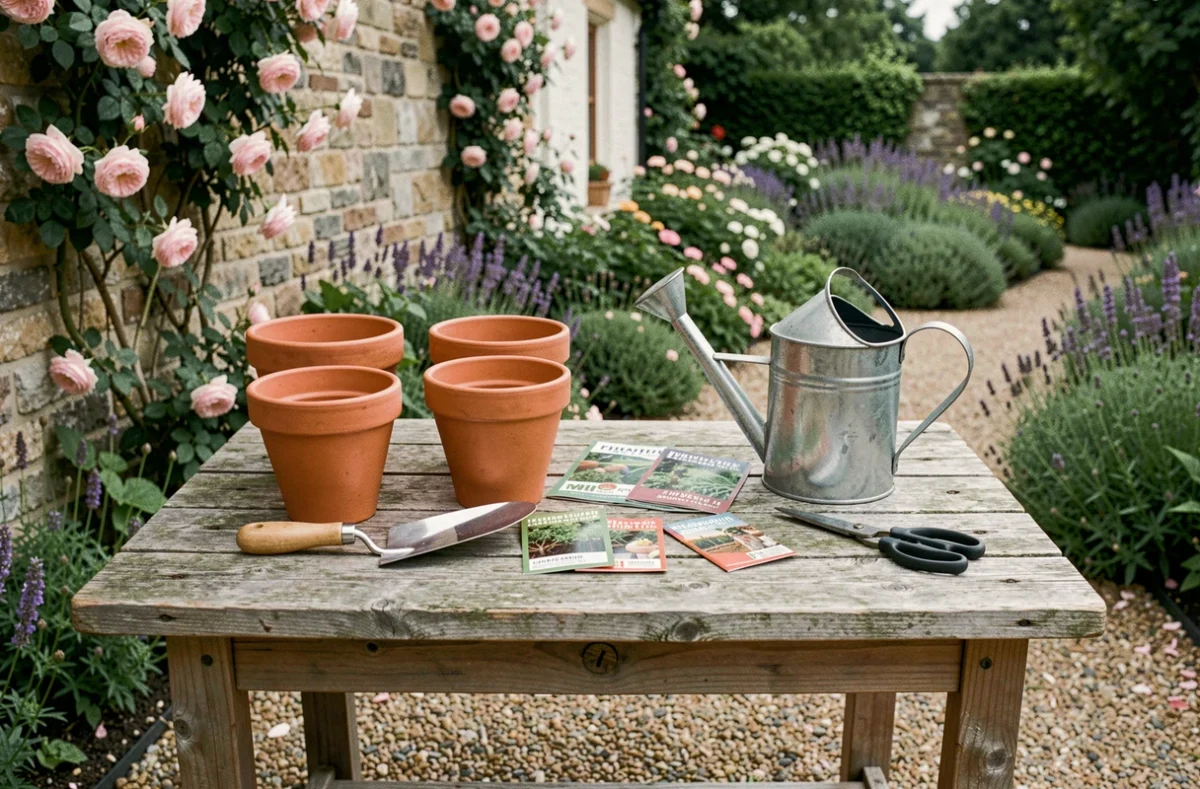
An improperly sized watering system wastes water without improving plant health. Before choosing between manual watering, drip irrigation, or a timer, it is essential to assess the nature of the soil and the actual needs of the plants in place.
Clay soil retains water longer than sandy soil. Installing drip irrigation on already compacted ground can cause excess root moisture. Conversely, draining soil requires more frequent but smaller amounts of water. Watering equipment should be chosen after analyzing the soil, not before.
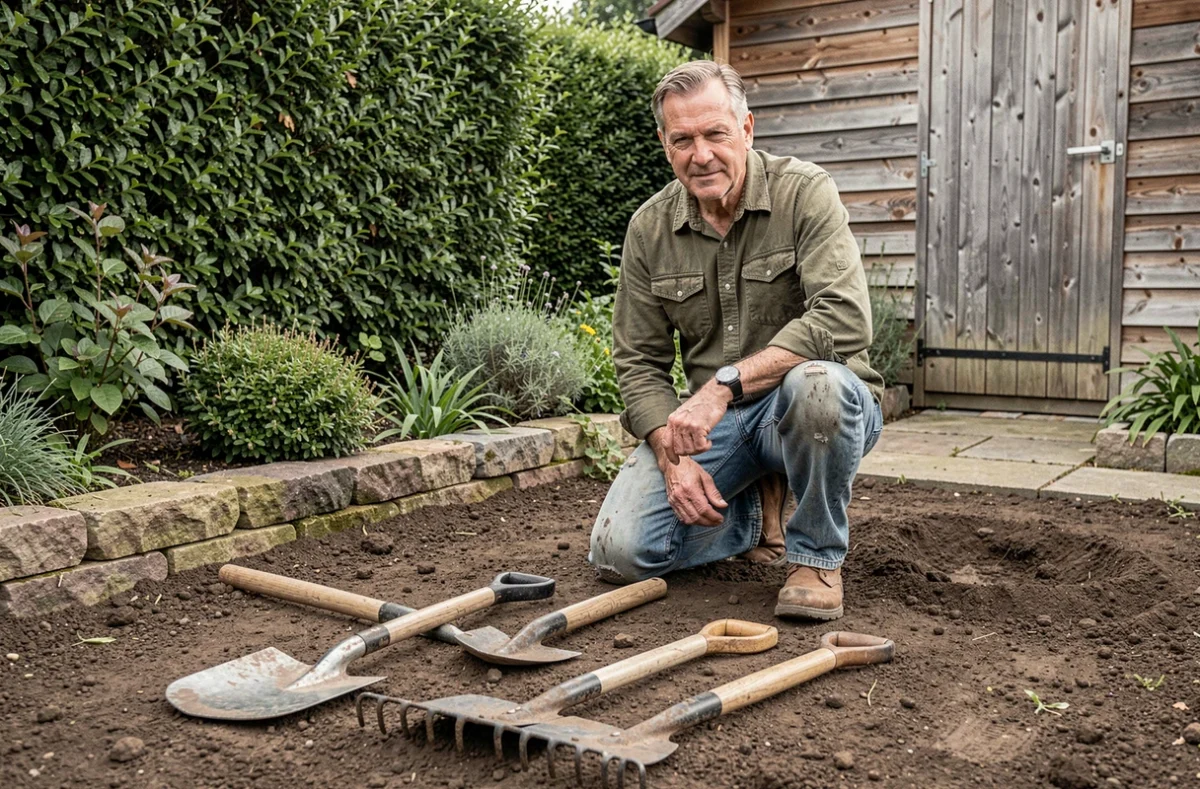
For regular maintenance (pruning, weeding, soil work), manual tools remain relevant in small spaces. A quality pruner, a well-balanced spade, and an appropriate rake cover most needs of a modest-sized garden. The tendency to over-equip a small outdoor space with motorized equipment generates disproportionate purchase and storage costs.
The choice of coherent garden equipment relies on a cross-reading of several parameters: local regulations, the actual durability of devices, soil and exposure conditions, and the area to be maintained. A well-equipped garden is not an over-equipped garden, but a space where each tool meets a specific and documented use.